
Love Is Observable
Leadership • Culture • Impact
Speaking on accountability and responsibility, privacy, and institutional integrity.

THE FRAMEWORK BEHIND EVERY TALK
The word love is often associated with private life. This framework reaches further. Objective Love is not defined by feeling alone. Its attributes become observable in behavior, whether they are embodied clearly or distorted by fear. This is as true in workplaces, institutions, and settings of care as it is in private life. The framework gives people a shared language for recognizing these patterns of behavior and examining the effects those behaviors produce.
Every talk applies one framework. Fifteen attributes describe what love does when it is present. Fifteen corresponding Faces of Fear describe how each attribute becomes distorted. A ten-level scale, running from Malicious to Unconditional / Generative, shows the degree to which love is being embodied in a moment, a pattern, a relationship, or an institution. Accountability and responsibility are not attributes. They are the two conditions under which the scale stays a mirror rather than a weapon.
The framework applies at five scales: intrapersonal, interpersonal, group, organizational, and societal. Because it examines observable behavior rather than stated intention, the same patterns can be recognized in a manager, a policy, a setting of care, or a culture. For executives, board members, managers, and human resources leaders, this makes culture visible in what an institution permits and what it corrects. For program leaders, clinicians, advocates, chaplains, and survivor-support professionals, it separates care from control and support from the removal of agency.

“Wisdom is truth in action. It takes courage to be wise.”
SPEAKING TOPICS
Each talk begins where the others do: in the framework of What Love Looks Like. The subject changes. The foundation does not. If your topic is not listed here, I welcome the opportunity to explore how it might be addressed from the same foundation.
Organizational Leadership: Culture, & Institutional Integrity
For executives, board members, managers, and human resources leaders seeking to apply the framework of Objective Love to examine behavior, relationships, and decisions within their roles.
Survivor-Centered Leadership: Privacy & Boundaries
For program leaders, clinicians, advocates, chaplains, and survivor-support professionals seeking to apply the framework of Objective Love to distinguish compassionate care from control, while protecting dignity, privacy, and agency.

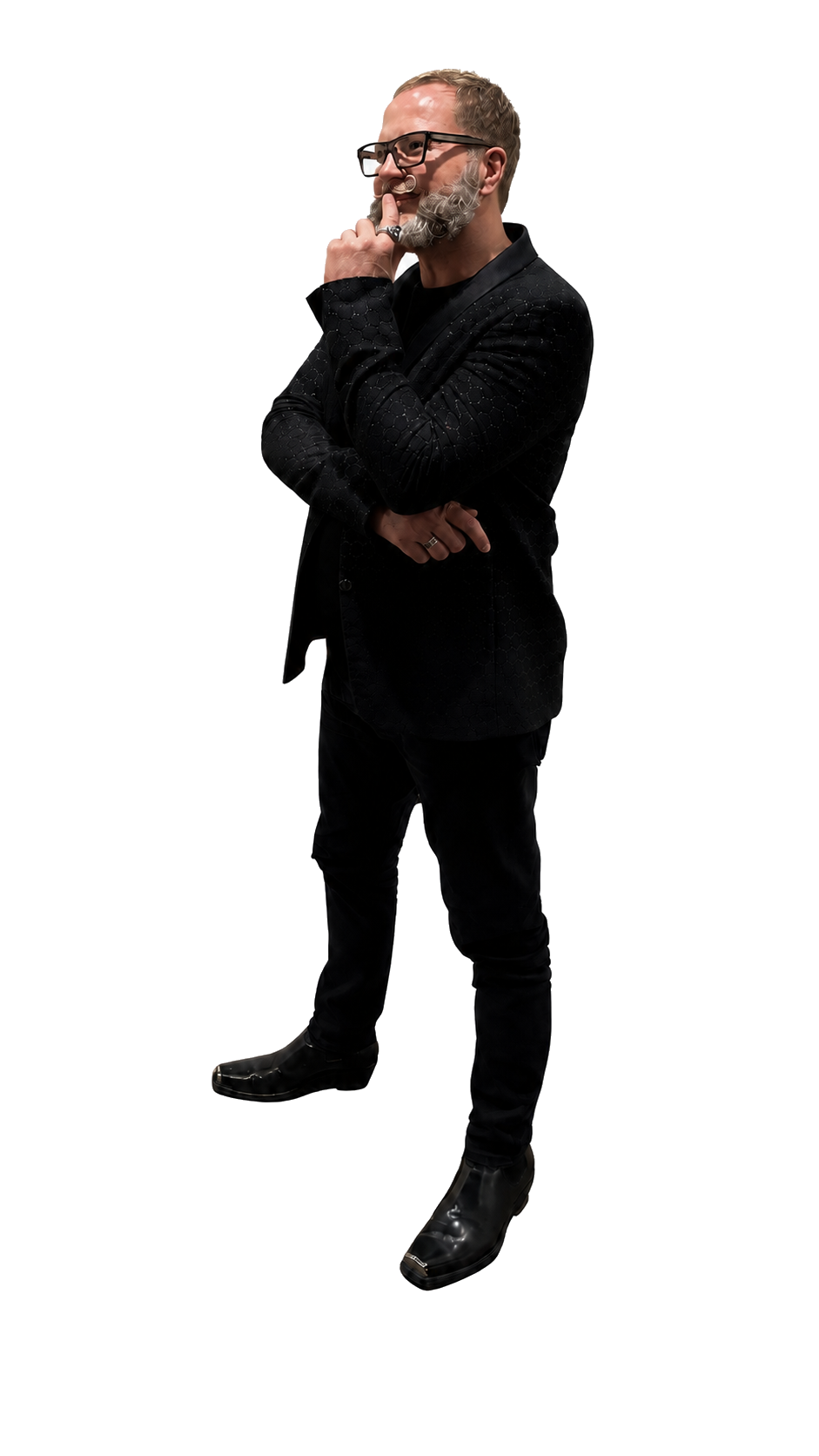
ABOUT DENNIS
Dennis Wyrzykowski entered monastic life at fifteen and left religious life in 2013. In between, he led a Carmelite community and built companies to move the monastery toward self-sufficiency. He pursued the legal work involving L'Oréal for more than a decade, beginning with attorney work in 2010, followed by his direct written engagement with L'Oréal in 2015, and culminating in federal patent litigation filed in 2017 and resolved in 2024.
He survived twenty years of grooming and sexual abuse beginning when he was thirteen. For the first three years, he believed it was love. By the time he understood otherwise, the person abusing him had isolated him from friends, outside support, and the other members of his community, leaving the abuser as his sole source of support. He felt trapped and unable to say no. For two years, he practiced nightly through prayer and meditation and against his own anxiety, until he could say no. The abuse ended when he was thirty-three.
He is autistic. He learned to read people’s behavior over time, and that reading became a framework. In What Love Looks Like he calls it Objective Love. Fifteen attributes describe what love does when it is present. A ten-level scale shows how love is being embodied. Two conditions, accountability and responsibility, keep the scale a mirror instead of a weapon.
He speaks to leaders who decide what their institutions will permit and what they will correct, and to the clinicians, advocates, chaplains, and program leaders responsible for the people in their care.
SELECTED EXPERIENCE
Director and Host of, Love, Truth & Miracles, 2000 to 2008
Adjunct Instructor, Social Psychology, Worcester State University
Retreat and Conference Facilitator, private groups and correctional settings
Correctional Educator, developed and led a program integrating cognitive behavioral principles and spirituality
ABOUT THE BOOK

What Love Looks Like
A theological memoir and a practical framework.
The abuse began when Dennis Wyrzykowski was thirteen and continued after he entered monastic life at fifteen. For the first three years he believed what was happening to him was love. Soon after he knew otherwise, felt trapped and unable to say no. The abuse did not end until he was thirty-three.
What he learned was a painful distinction: sincere love is not the same as sufficient discernment. He had loved freely, yet did not always recognize when care had become rescue, endurance had become self-erasure, or another person’s conduct contradicted the language of love. This book is his account of learning to tell love from what imitates it, and of building something other people can use to tell the difference. Love is not a feeling certifying itself. Love is observable, and it has structure. Fifteen attributes describe what love does when it is present. A ten-level scale shows how love is being embodied in a person, a relationship, or an institution. Two conditions, accountability and responsibility, keep the scale a mirror rather than a weapon.
Grounded in lived experience, Carmelite formation, and institutional leadership, the book moves between narrative and framework: what happened, and what it revealed. It is written for survivors and the people who love them, for anyone working to tell life-giving love from control, fear, or harm, and for anyone responsible for an institution that will keep or lose its integrity through what it permits and what it corrects.
From Chapter One: The First Encounter
I was four years old. It was early — around 5:30 in the morning — and the street was quiet in the way summer mornings are quiet before the world remembers to begin. I had walked outside alone and sat down at the curb, settling into the space between the asphalt and the dirt beside the grass. My fingertips rested against the surface of the road. It felt like sandpaper — aged and rough and absolutely present beneath my small hands. The woods stood across from me and to my right. Birds moved through the trees, their sound clear and unhurried. A breeze carried the freshness of early morning across my skin.
Then something changed — not in the world around me, but in the space my body occupied within it. A gentle pressure settled over me, the way a hand rests on a shoulder without weight or demand — present, steady, and completely without surprise. My body received it the way it received the breeze — naturally, without resistance, as if this were simply the next thing the morning intended to give. There was nothing to see and no voice to hear. What arrived was not information but certainty — a confidence so complete it required nothing from outside itself. In a single moment of absolute calm I knew I was held. I knew I was seen. I knew I was not alone in any sense that the word alone had ever meant to me before.

INVITE DENNIS TO SPEAK
Please share the intended audience, the purpose of the event, and the questions or needs you want the talk to address.
Stay Connected
Receive occasional updates about What Love Looks Like, new writing, speaking events, and work concerning leadership, accountability, privacy, and wholeness.
By subscribing, you agree to receive occasional emails from
Dennis Wyrzykowski. You may unsubscribe at any time.